
Beninese art embodies a fascinating dialogue between a rich tradition and audacious modernity. Heir to ancient kingdoms and deeply influenced by spiritual traditions like Vodoun, it reflects the soul of a country shaped by its cultural heritage. Today, this art is not merely a witness to the past, but a dynamic force addressing global issues such as identity, environmental sustainability, and gender equality. From the return of the famous royal treasures in 2022 to landmark exhibitions like Révélation !, Beninese art continues to build a bridge between tradition and modernity.
Yet this artistic momentum is accompanied by major challenges, such as the lack of cultural infrastructure, funding, and visibility for emerging artists. This article examines the opportunities and obstacles shaping this rapidly evolving artistic scene.
Key Points Covered:
- The legacy of royal bronzes and the influence of Vodoun on Beninese art: pillars of traditional art.
- The rise of contemporary art in Benin: new perspectives and challenges for emerging artists.
- International collaborations and the restitution of works: drivers for global recognition.
- Structural obstacles: insufficient cultural infrastructure, centralization of cultural activities, and lack of funding.
Beninese art thus reveals itself as a window onto history and an engine for the future, uniting tradition and modernity in a quest for universal expression.
I - Treasures of Benin: ancestral heritage, royal art and contemporary creativity
Beninese art is a living testimony to the wealth of its history, culture, and heritage. Through the centuries, against all odds, the country has managed to preserve its traditions while opening itself to contemporary expressions.
1. Royal art of Dahomey: Vodoun heritage and traditional Beninese practices
The history of Beninese art often evokes the famous treasures of the Dahomey royal court, a well-organized state that symbolizes the power and wealth of ancient kingdoms. These works, often displayed in international museums, testify to Benin's exceptional craftsmanship. It is important not to confuse them with the bronzes of the Benin kingdom in Benin City, Nigeria. The Dahomey bronzes embody a unique and distinct cultural identity.
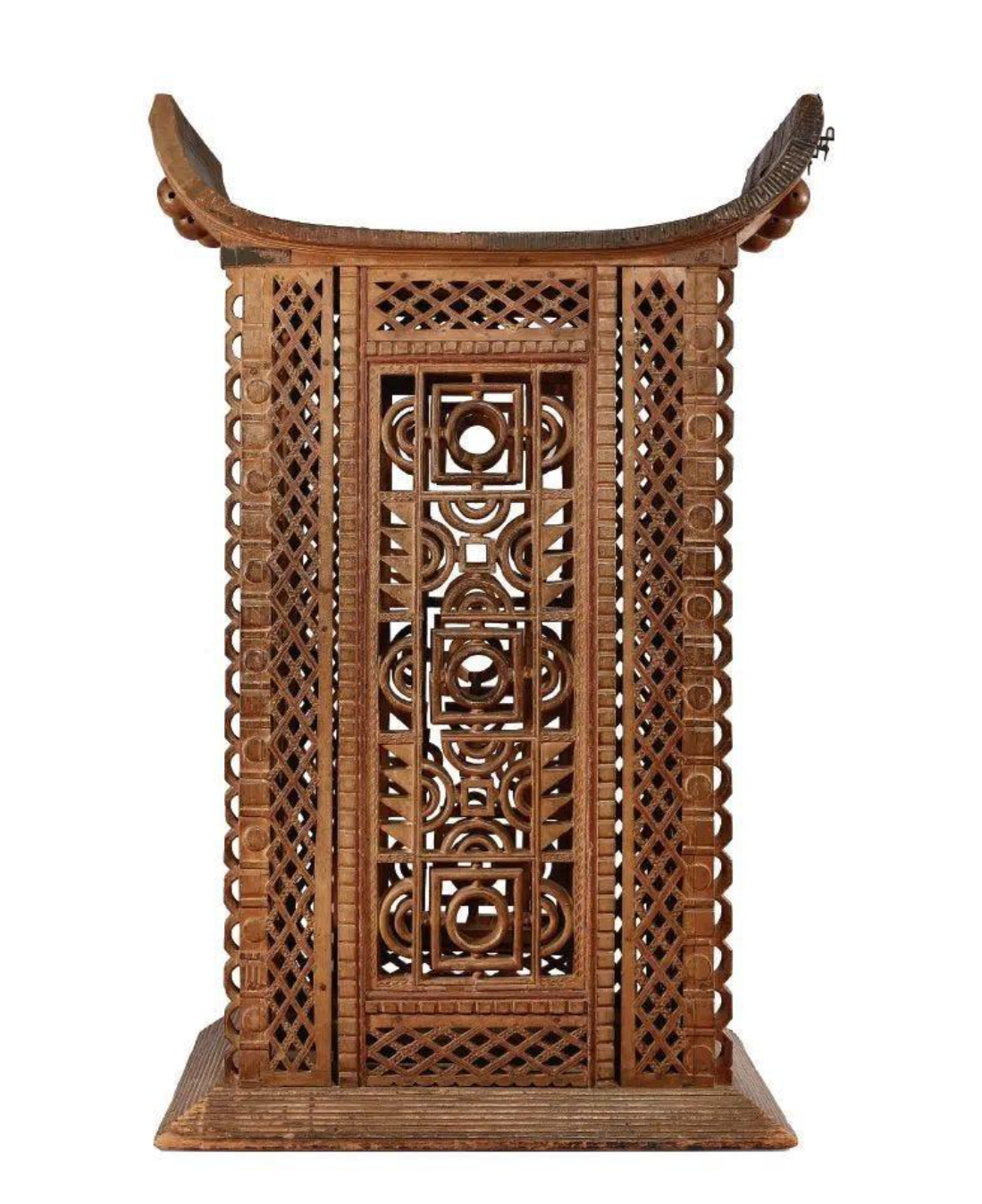
Ceremonial Throne of King Ghézo, Kingdom of Danxomey, 19th century, Wood, metal, 199×122×88 cm, Restored Dodds Collections
Beyond Dahomey, other kingdoms such as Nikki, Allada, and Porto-Novo have left their mark on Beninese art. Nikki, with its Sahelian influences, stands out for its bronze and leather sculptures. Porto-Novo, influenced by Yoruba culture, is famous for its Gèlèdé masks, while Allada embodies a sober yet refined aesthetic.
Vodoun culture deeply inspires traditional Beninese art. Sculptures, masks, and fetishes, often linked to spiritual rituals, reveal powerful symbolism. Works such as Legba statues or Egungun masks celebrate deities and ancestors, though often misunderstood in international markets.
2. The Beninese avant-garde: how contemporary artists in Cotonou are redefining African art
Contemporary art in Benin is marked by a new generation of artists who push the boundaries of creation. They explore current themes such as identity, globalization, and postcolonial heritage. While artistic events like the Révélation ! exhibition testify to Benin's innovation and vitality, efforts must be made to further support emerging artists who struggle to gain visibility outside major institutions.
Infrastructures like Benin's National Gallery, recently renamed ADAC, offer support to young talent and projects, but an expanded network of galleries, cultural spaces, and transparency in processes are needed to meet growing demand.
The Beninese contemporary art scene distinguishes itself through great diversity of mediums, combining tradition and modernity. From vibrant paintings to monumental sculptures, from immersive videos to engaged performances often reinterpreting cultural rituals and ceremonies, each work reflects a unique perspective on Benin's culture and history. This plurality of forms enriches collections in galleries and exhibitions around the world.
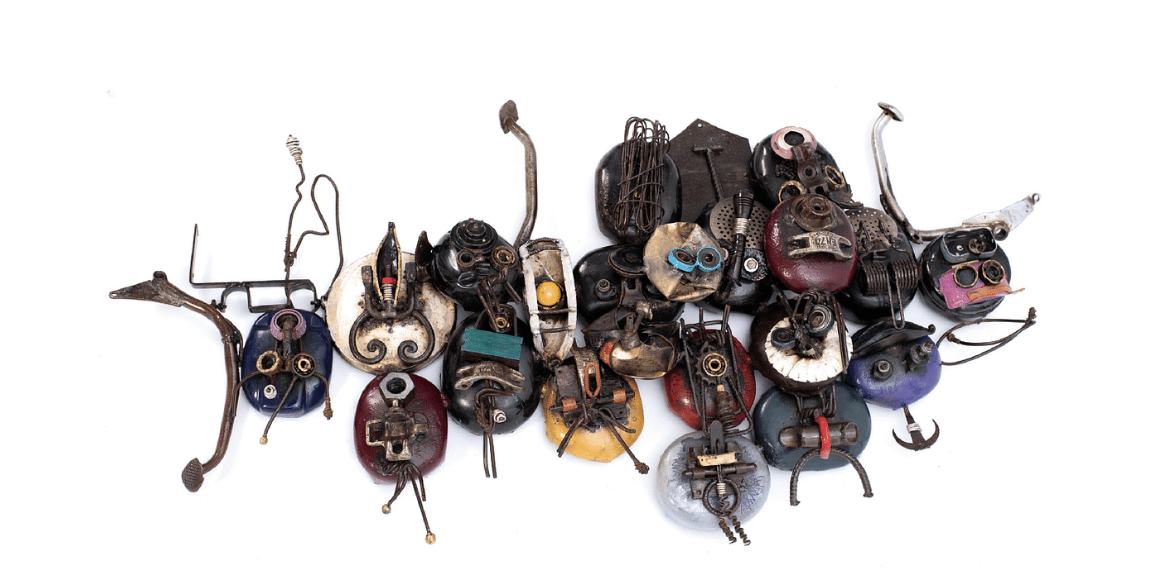
The Witnesses N°1, 2019, metal assemblage, 150 × 77 × 14 cm, © Charly d'Almeida, National Gallery Collection
II - Between traditions and modernity: themes and influences in Beninese art
In Benin, art is deeply rooted in the country's history, culture, and traditions. As a mirror of society, it reflects the challenges, aspirations, and transformations that mark Benin. Artists explore rich and varied themes, ranging from historical narratives to contemporary social issues, making each work a source of inspiration and reflection.
1. Ancient kingdoms: traditional sculptures and the legacy of Beninese dynasties
Benin's history, marked by the grandeur of kingdoms, the slave trade, and colonization, has profoundly influenced its artistic works. Traditional sculptures and contemporary paintings draw inspiration from these narratives to tell stories of struggles, triumphs, and collective identity: from royal symbols of ancient Beninese kingdoms to representations of the slave trade and its impacts, as well as struggles for independence and national reconstruction.
Today, associations, galleries, foundations, and especially authorities value these narratives through exhibitions that highlight the wealth of Beninese heritage.
2. Cultural metamorphoses: slavery, identity, and postcolonial narratives in contemporary art
Contemporary Beninese art addresses powerful themes such as identity, slavery, and postcolonial narratives to question past injustices and their current repercussions.
Romuald Hazoumè, with La Bouche du Roi, uses recycled materials to represent slave ships, denouncing the slave trade while calling for deep reflection on history and reconciliation.
Julien Sinzogan explores the spiritual return of enslaved souls through works blending Vodoun culture and African mythology, offering a unique perspective on slavery's legacy.
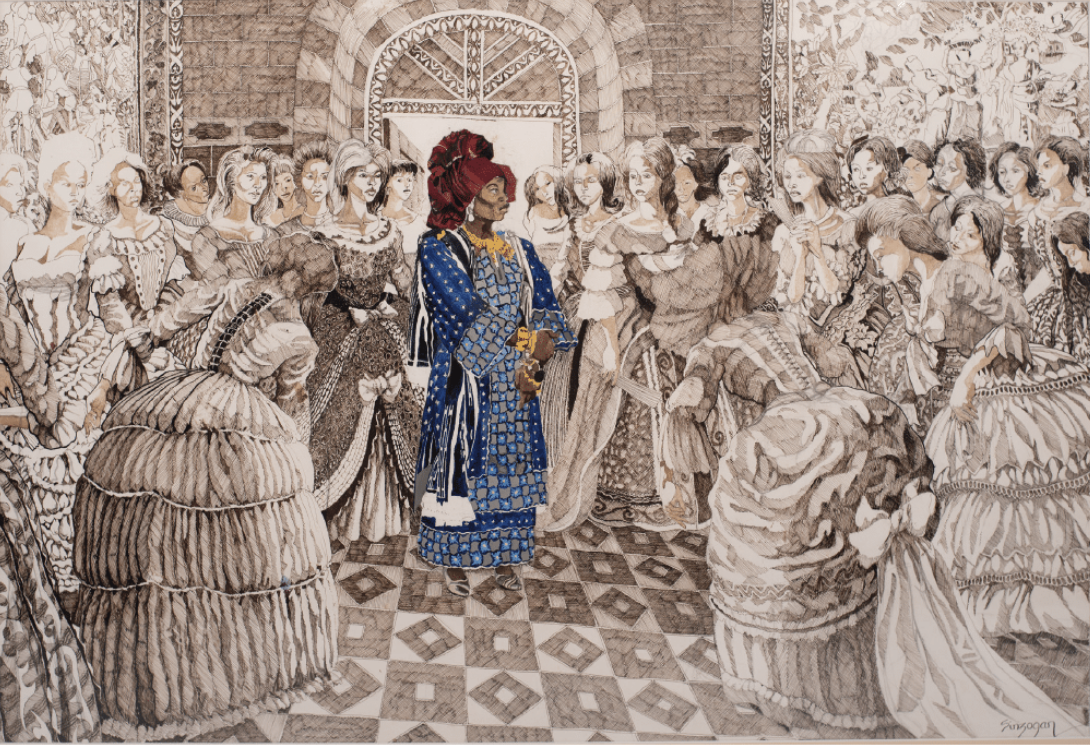
Reverence, 2021, acrylic on canvas, 60 × 90 cm, © Julien Sinzogan
Dominique Zinkpè denounces social and economic inequalities inherited from the colonial era through sculptures and installations rooted in Vodoun culture, highlighting identity conflicts and power imbalances.
Fabrice Monteiro, through photography, addresses the impacts of globalization and climate crisis on Africa. His series The Prophecy stages mythological figures in landscapes of ecological disasters, a powerful call for environmental responsibility.
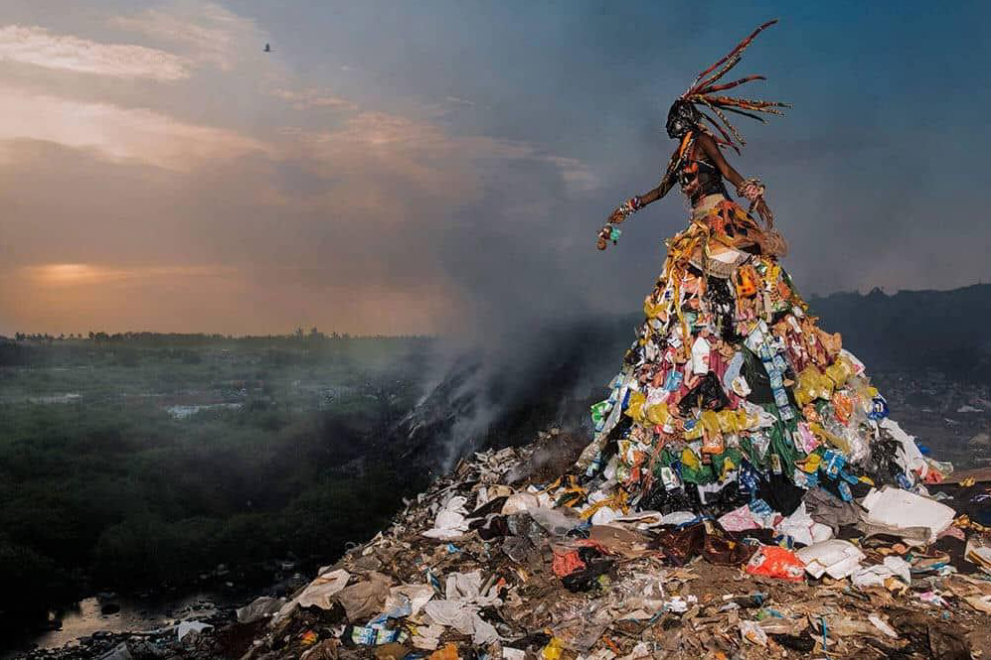
Prophecy 01/13, 2016, © Fabrice Monteiro
Street art also plays a central role. The International Festival of Urban Arts Effet Graff, whose recent edition was funded by the Claudine Talon Foundation and organized in collaboration with the National Gallery, recently highlighted current themes through accessible and engaged works.
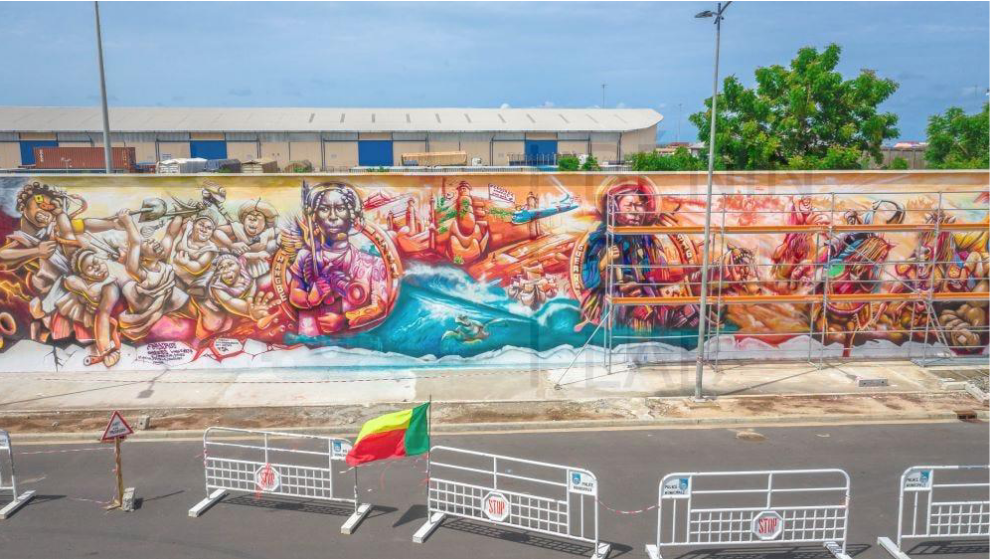
Wall of the Port Authority of Cotonou, Effet Graff 8, Cotonou, 2022, © Imagine Benin / Assart
These artists, supported by international exhibitions and cultural restitutions, use their art as leverage for social justice and cultural reclamation. They establish themselves on the global stage, offering direct social critique and strong cultural anchoring, while opening dialogues on history, identity, and future challenges.
III - Treasures recovered, arts revealed: the impact of restitution on Benin's cultural momentum
Beninese art is experiencing significant growth thanks to these events and exhibitions that highlight the wealth of our heritage. These initiatives foster a fruitful dialogue between history, tradition, and contemporary creation, positioning Benin as a central player on the international art stage.
1. The 2022 physical restitution: how the return of 26 royal treasures redefines Benin's history
The restitution of 26 royal treasures by France in 2022 marked a historic milestone, opening the way to new perspectives for the development of contemporary Beninese art. In a message addressed to the nation, President Patrice Talon invited all Beninese people, as well as citizens of the world, to come discover these unique works that reflect the country's history, identity, and soul.
Excerpt from President Patrice Talon's Message:
From North to South of the country, from East to West and from the farthest reaches of all diasporas, Beninese women and men of all generations are invited to come discover them. As much as any citizen of the world who wishes to. These are unique cultural works that tell our history, our identity, our soul.
The 26 restituted works include emblematic objects such as:
- The ceremonial throne of King Ghézo
- The throne of King Glèlè
- The anthropomorphic statue representing King Béhanzin
- The sculptured doors of the Abomey royal palace
- Récades (royal insignia) and asen (portable altars)
This piece captures my thinking at the time of writing. Like everything living, my perspectives evolve. What is true for me today might not be tomorrow. If you find an error or want to discuss, feel free to reach out.
Aucun commentaire pour le moment. Soyez le premier!