
Axis Ibeji
Building cultural infrastructure when no one asked for it. A photographer's detour into blockchain and museum tech.
I didn't set out to build a cultural technology agency. I wanted to be a photographer.
In 2017, I was documenting Cotonou's art scene-gallery openings, artist studios, street murals. But the more I photographed, the more I noticed a pattern: artists were creating incredible work, but it was circulating without protection, without trace, without sovereignty.
A painter would sell a piece to a collector. No contract. No certificate. Just a handshake and cash. Five years later, that painting would resurface at an auction house in Paris for 10x the price. The artist? Never contacted, never compensated.
I kept thinking: There has to be infrastructure for this.
The pivot: from lens to code
In 2021, I started doing less photography and enrolled in a coding bootcamp. My friends thought I was having a quarter-life crisis. Maybe I was. But I needed to understand how to build the systems I kept wishing existed.
I spent two years learning: Python, JavaScript, databases, blockchain basics. I was a terrible student-impatient, always jumping ahead to build things before understanding fundamentals. But I shipped projects. Ugly, broken projects that barely worked. But they worked.
By 2023, I had a decision to make: go back to photography with new technical skills, or double down on building infrastructure. I chose infrastructure.
That's when Axis Ibeji was born.
What even is Axis iIbeji
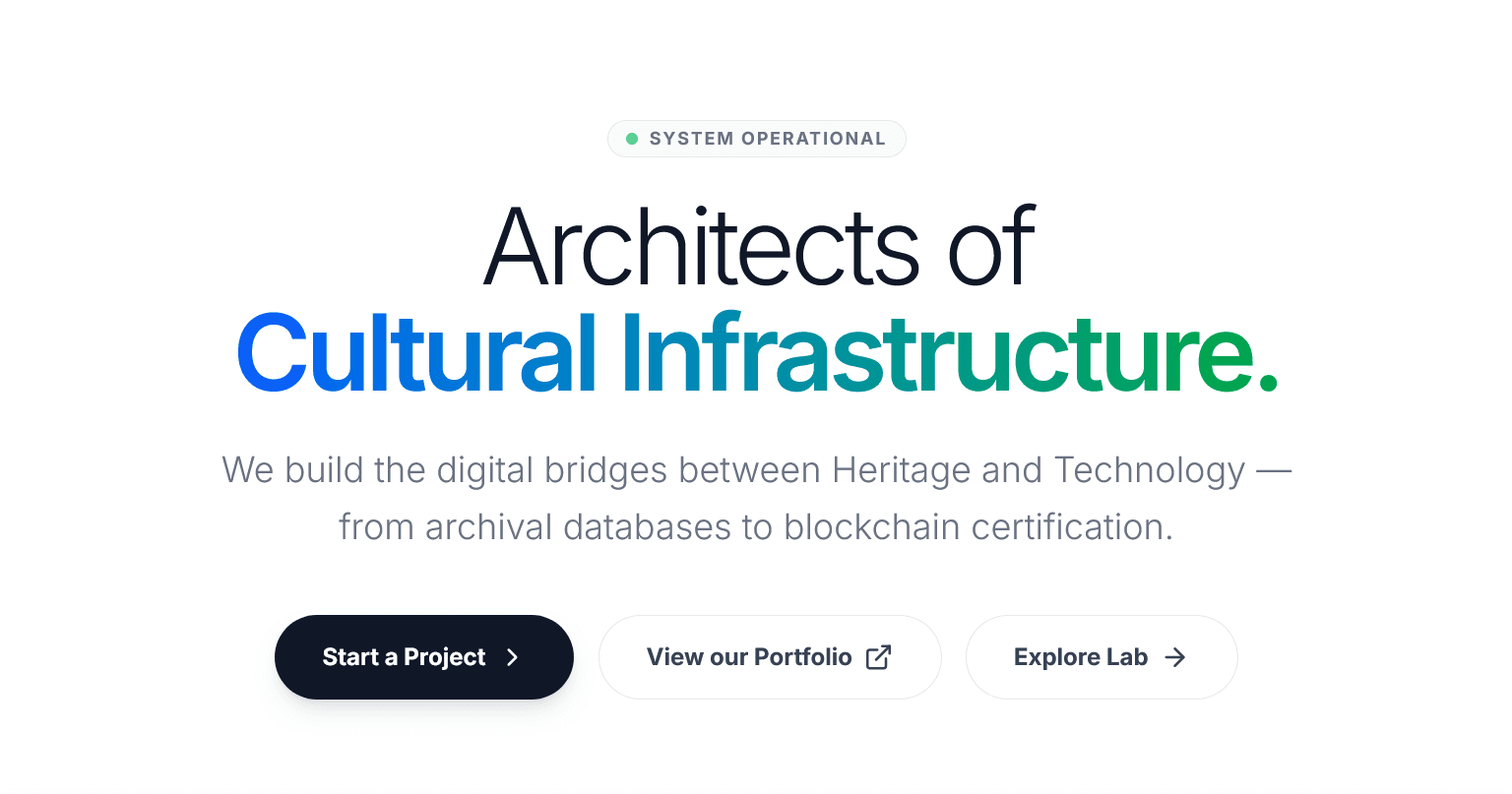
Honestly, I'm still figuring it out. The simplest answer: Axis Ibeji is the holding structure for all the cultural infrastructure tools I'm building.
It's not a traditional agency. We don't have a sales team or marketing budget. It's more like... a workshop? A lab? A personal R&D department disguised as a business entity?
The name itself is intentional: Ibeji means "twins" in Yoruba-representing the duality I live in. I split my time between Helsinki (where I learned systems thinking and Nordic design precision) and Cotonou (where I learned storytelling and cultural context). Axis Ibeji is the bridge.
The 4-pillar architecture
Over time, the work organized itself into four interconnected projects:
1. 3D Digital Restitution
High-fidelity scanning of cultural artifacts for virtual repatriation. I started this after visiting a Finnish museum that had Beninese bronzes in storage-artifacts that hadn't been seen by Beninese people in 120 years. If we can't get the physical objects back (politics, bureaucracy), can we at least create perfect digital twins? That's the bet.
2. Meridian Artifact ID
Phygital provenance system using NFC chips embedded in artworks. This came from watching too many auction fraud cases where paintings were "authenticated" by opaque expert networks. What if authentication was cryptographic instead of political? Still figuring this one out.
3. Meridian Archive
Museum collection management software that doesn't cost $50k/year. Born from watching a museum curator manage 10,000 artifacts in an Excel spreadsheet. She deserved better tools. So I'm building them.
4. Noutita
Creative sovereignty protocol for the AI age. This is the most speculative project-still in research phase. The idea: can we prove the process behind creative work, not just the final output? Early days.
The hard truths
Money is Weird
I bootstrapped everything. No investors, no grants (tried, failed, gave up on grant bureaucracy). This means progress is slow. I take client projects to pay rent, then nights/weekends go to these tools.
It's unstable. My mom thinks I should get a "real job." She might be right. But there's no job in Helsinki right now. So I'm building my own.
Identity Crisis
Am I a developer? A consultant? An artist? A museum person? The answer is "yes" which confuses everyone. Potential clients don't know what box to put me in. Neither do I.
Trust Takes Forever
Museums are 100+ year institutions. I'm one person with a laptop. Why should they trust me with their collections? Fair question. I've learned to lead with listening, not pitching. Spend months understanding their world before proposing solutions.
One curator told me: "You're the first tech person who doesn't talk down to us." That hurt to hear, but also explained why adoption is slow.
Technical Debt is Real
I made architectural decisions in 2021 that haunt me in 2025. I chose tech stacks because they were trendy, not because they fit the problem. Rewrites are expensive. I'm still paying for those mistakes.
Where we are
Axis Ibeji is operational with active projects in Benin, Finland, and France. Clients include museums, private collectors, and cultural foundations. Revenue is modest. Team is still just me + occasional collaborators.
Recent wins:
- Scanned 50+ artifacts for museum partners
- Deployed collection management software in 3 institutions
- Got invited to speak at a museum tech conference (imposter syndrome intensified)
Honest struggles:
- Still figuring out sustainable business model
- Miss photography sometimes (the instant feedback, the tangible beauty)
- Lonely working solo on long-term infrastructure
What's next?
I don't have a 5-year plan. I have a direction: keep building tools that give artists and institutions sovereignty over their cultural data.
Short-term:
- Hire first employee (someone who can do design/UX)
- Publish open-source versions of core tools
- Maybe write a book about this journey?
Long-term:
- Axis Ibeji becomes infrastructure that outlives me
- Other people fork the tools, improve them, take them in new directions
- I go back to photography, knowing the systems exist
This is the bridge between code and culture. Between Helsinki precision and Cotonou narrative richness.
Still building.